
Hunting Lechwe in Africa
If you’re looking for a hunt that combines challenging terrain, striking beauty, and a uniquely African experience, the lechwe deserves a top spot on your list. These marsh-dwelling antelope are unlike anything else you’ll encounter on safari. Their long, sweeping horns, golden coats, and powerful legs built for waterlogged ground make them one of the most memorable plains-game trophies you can take home from Africa.
View our hunting packages here.
At Huntershill Safaris, we guide hunters from the US, Europe, and across the globe who want to experience a hunt that’s both ethical and exhilarating. Whether you’re a first African hunting safari, you’re coming with family, or joining a group of seasoned hunters, lechwe hunting offers the perfect mix of strategy, skill, and safari adventure. This guide walks you through everything you need to know: behavior, habitat, shot placement, caliber recommendations, field judging, and what to expect when you hunt with us.
Skip ahead: Book your next safari today
Let’s get to know the Lechwe
Lechwe are one of Africa’s most fascinating antelope species, and the moment you see them moving through flooded grasslands, you’ll understand why. They’re perfectly built for life in wetlands: long legs, splayed hooves that act like snowshoes, and a bounding running style that lets them glide through water with surprising speed.
Their behavior is heavily shaped by the terrain. You’ll find them in loose herds, usually dominated by females with bachelor groups nearby. Mature rams often hold territories, especially in the dry season when competition becomes more intense. This territorial structure means that identifying a good trophy ram often requires patience and careful glassing.
For hunters, this environment creates a completely different kind of stalk. Instead of the typical African savanna, you’ll be glassing reed lines, using natural cover, and positioning yourself carefully to avoid being spotted across open marsh.
Where Lechwe Live: Habitat and Terrain
Lechwe thrive in marshlands, floodplains, and shallow wetlands. These environments offer wide visibility, making spotting easier, but stalking harder. The terrain forces you to move slowly, pick careful paths, and pay close attention to wind direction.
Hunting lechwe is a refreshing departure from traditional savanna stalks. The ground may be soft underfoot, occasionally muddy, and sometimes partially submerged.
This means two things:
- You need to stay patient. The reeds and shallow water create sound, and one misplaced step can alert the entire herd.
- You’ll work for your trophy. The stalk can include long loops, careful approaches, and positioning against the light to avoid silhouette.
At Huntershill Safaris, we know every contour of our land, including the preferred feeding areas, bedding spots, and water crossings. This experience allows us to plan smart, strategic stalks that give you the best chance of success, while always maintaining ethical hunting practices.
Field Judging a Trophy Lechwe
A mature lechwe ram is unmistakably impressive. But recognizing one quickly and accurately requires experience. Here’s what we teach hunters in the field.
Key Trophy Indicators
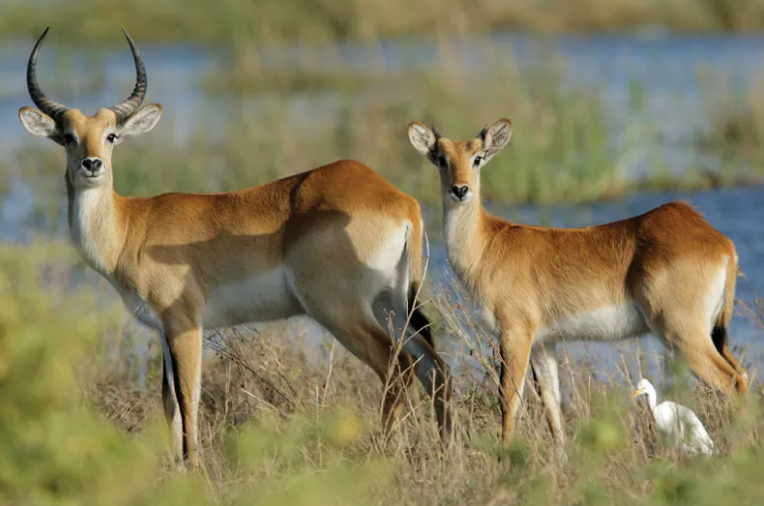
- Horn Length: Long, sweeping, lyre-shaped horns with solid curvature and strong tips.
- Mass and Bases: Thicker bases and heavier horn mass indicate maturity.
- Ridge Pattern: Well-defined rings and ridges along the horn.
- Body Condition: Deep chest, muscular neck, mature facial features.
- Behavior: Mature rams often hold ground confidently and display territorial behavior.
Glass time is essential. You’ll often spot several rams before finding the one that stands out. Our PHs help you judge distance, direction of movement, and whether you should commit to a stalk or wait for a better opportunity.
Shot Placement for Lechwe
Because lechwe are usually hunted in open but wet terrain, shot distances are typically moderate, often between 120 and 220 yards. Your shot window can be brief, especially if the herd begins to move.
Vital Zone and Recommended Placement
- Broadside: Aim behind the shoulder, one-third up the body. This provides a clean double-lung shot.
- Quartering Away: Aim slightly forward from the offside leg to reach the vitals.
- Avoid Quartering Toward: The angle often limits penetration and increases the chance of wounding.
Lechwe are tough animals, with thick coats and strong muscle structure built for marsh running. A well-placed shot is essential, and we always prioritize ethical takedowns.
Quick Read: A Guide to Trophy Hunting in Africa
Caliber Recommendations
Lechwe aren’t as heavily built as large plains game like kudu, but they’re more substantial than impala or springbuck. To ensure clean, ethical kills, we recommend:
Ideal Calibers
- .270 Win
- .308 Win
- .30-06 Springfield
- 7mm Rem Mag
- .300 Win Mag for longer distances
Bullet Choice
A sturdy, controlled-expansion bullet such as:
- Barnes TTSX
- Nosler AccuBond
- Hornady GMX or InterBond
These deliver excellent penetration without excessive meat damage. If you’re traveling internationally, let us know ahead of time. We can advise on firearm import requirements or arrange a high-quality rental rifle.
The Stalk: What to Expect on a Huntershill Lechwe Hunt
Hunting in Africa – specifically lechwe with Huntershill Safaris – is an immersive, mindful experience. You’ll start early, when the floodplain light is soft and movement is easiest to spot. We glass from a distance, identify suitable rams, and make a plan.
Typical Hunt Flow
- Morning glassing over open wetlands
- Identifying a mature ram based on distance, direction, and herd movement.
- Planning the approach, often using reed lines or gentle terrain features.
- Slow and careful stalking, keeping noise and silhouettes low.
- Setting up for the shot, either seated, kneeling, or using shooting sticks.
- Recovery and trophy inspection, followed by photos and a respectful moment to honor the animal.
Every stalk is different. That’s part of the thrill. The terrain, the water, the herd behavior, everything makes this hunt unforgettable for both first-timers and seasoned safari hunters.
Why Hunters Love Lechwe as Part of a Plains-Game Safari
Lechwe are often a bucket-list species for hunters who want:
- A visually stunning trophy
- A different kind of African stalk
- Ethical, fair-chase hunting
- A challenge without being overly technical
- A species with character and charm
They pair well with hunts for sable, waterbuck, kudu, impala, and bushbuck, creating a well-rounded safari experience.
Explore: Hunting for Trophy Plains Game – An Affordable Way to Enjoy a Safari in Africa
Why Hunt Lechwe with Huntershill Safaris
At Huntershill Safaris, we pride ourselves on offering ethical, fair-chase hunting with knowledgeable PHs and world-class hospitality. Our land offers diverse terrain, healthy lechwe populations, and plenty of opportunity for quality stalks.
Hunters appreciate our approach because we:
- Know the terrain intimately
- Offer honest, expert trophy judging
- Prioritize safety and ethical hunting
- Focus on creating memorable experiences, not rushed shots
- Provide warm, comfortable accommodation and authentic African hospitality
Whether you’re joining us for your first safari or your tenth, we shape the experience around your goals and your pace.
Book Your Lechwe Hunt with Huntershill Safaris
If the idea of stalking a mature lechwe across Africa’s shimmering wetlands excites you, then now is the perfect time to plan your hunt.
At Huntershill Safaris, we welcome hunters from the US and Europe every year who want a challenging, rewarding plains-game experience, supported by expert guides, ethical practices, and some of the most stunning hunting terrain on the continent.
Ready to experience a lechwe hunt you’ll remember for a lifetime?
Contact Huntershill Safaris today to begin planning your safari.