
Hunting Hartebeest in South Africa
A mature red hartebeest bull is a striking sight on an Eastern Cape hillside. Hunting hartebeest at Huntershill Safaris combines the best of open-country stalking with the challenge of identifying a mature bull among watchful animals. Hunters choose the red hartebeest as part of their hunting package for their distinctive African trophy, with long faces, high shoulders, and angular horns.
Across our 55,000-acre Wildschutsberg Game Farm, you’ll hunt alongside our professional hunters and trackers, watching the herd and working through the terrain as the stalk unfolds. Whether you’re carrying a rifle or bow, pursuing your first African trophy or adding hartebeest to years of hunting experience, there’s plenty to appreciate about this distinctive antelope. Here’s a closer look at the animal, the hunt, and what makes red hartebeest worth pursuing with us in South Africa.
Key takeaways
- Red hartebeest are the hartebeest hunted at Huntershill. They are also known as Cape hartebeest.
- Their habitat is mainly open grazing country, including grassland, savanna, and lightly wooded areas.
- Both bulls and cows carry horns. Body maturity and horn mass help distinguish a trophy bull.
- Rifle hunting usually involves spotting and stalking. Our bow hunting includes blinds and stalking where conditions suit.
- The heart-and-lung area is the principal shot-placement target, with the animal’s angle determining the path through the chest.
- A red hartebeest trophy costs US$1,200 (2026 price).
Ready to start your adventure? Enquire today about your hunting safari.
The red hartebeest: A distinctive African trophy
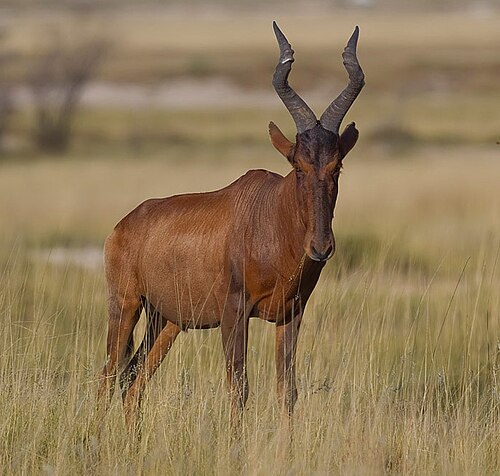
The red hartebeest is the southern African form of hartebeest. Its reddish-brown coat, dark facial markings, elongated muzzle, and steeply sloping back make it recognizable even before the horns come into view.
Mature bulls average approximately 330 pounds (150 kg), while cows average around 265 pounds (120 kg). The high shoulders and relatively narrow hindquarters give the animal an unusual profile, but hartebeest are powerful, agile runners.
Their horns rise high on the skull, bend outward and forward, and turn backward toward the tips. The ridged bases and pronounced bends give a red hartebeest trophy a character quite different from the sweeping horns of a wildebeest or the spirals of a kudu.
For hunters considering what to hunt in Africa, hartebeest offers an engaging addition to a mixed plains-game safari. The appeal lies in both the animal and the hunt required to reach it.
Hartebeest habitat: Open country with room to watch
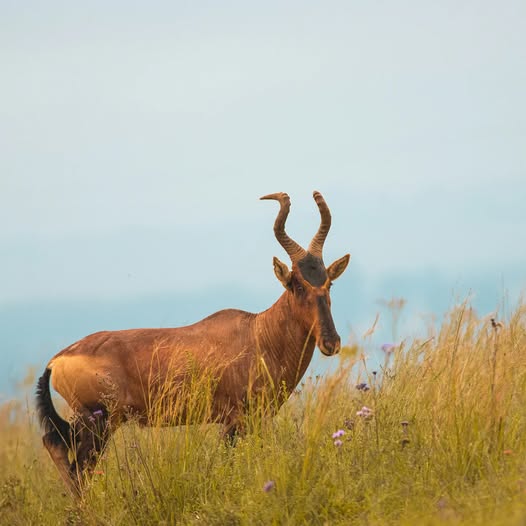
Red hartebeest inhabit grassland, open plains, savanna, and light woodland. They feed mainly on grass and can occupy relatively dry landscapes where grazing remains available.
When hunting hartebeest at Huntershill, our Eastern Cape terrain adds slopes, ridges, and valleys to that open-country setting. Seeing an animal and reaching it are separate parts of the hunt. A herd feeding on an exposed slope may be easy to locate, while the approach depends on folds in the ground that conceal movement.
The open habitat also provides time to observe. Your PH can study the animals, distinguish bulls from cows, and assess maturity before a stalk begins. That matters with hartebeest because a horned animal is not automatically a bull.
Grazing helps explain their movements. Fresh growth after rain can draw animals into different feeding areas, while dry conditions change the resources available. A herd’s location reflects those conditions rather than a timetable.
Hartebeest behavior: Why the herd matters
Hartebeest live within a structured social system. Females and young associate in groups, younger males form bachelor groups, and mature bulls defend territories. Females move through those territories as they follow grazing.
Hartebeest are alert. When hunting hartebeest at Huntershill, watching the herd is part of the experience. It reveals which animal is being pursued, how the group is moving, and whether an approach can develop.
How to hunt hartebeest at Huntershill
Rifle hunting hartebeest generally involves locating animals, assessing a suitable bull, and stalking within a workable shooting distance. Wind, terrain, and herd movement shape the approach.
Our Huntershill team includes experienced professional hunters and trackers who conduct both rifle and bow safaris. You share the hunt with people who understand the ground, assess the animal, and manage the opportunity in front of you.
Rifle hunting and shooting distance
Open habitat can create longer shooting opportunities, but hartebeest hunting does not always require a long shot. Broken ground may allow a close approach even where the initial sighting was across a valley.
Our long-range hunting takes place in terrain where distance and wind are significant factors. Shooting distance remains dependent on the hunter, equipment, conditions, and the animal’s presentation. Seeing a bull clearly through a scope is only one part of that assessment.
Bow hunting hartebeest
Bow hunting brings the encounter closer. At Huntershill, our bow hunting includes ground and elevated blinds, with some positioned near waterholes. Stalking is also used when cover and conditions allow.
Best shot placement for hartebeest
The heart-and-lung area in the forward chest is the principal target for hartebeest hunting. A broadside animal provides the clearest view of this vital area. The high shoulders and sloping back make the center of the animal’s overall silhouette an unreliable reference.
Broadside rifle placement
On a fully broadside hartebeest, the heart-and-lung zone sits low in the forward chest, approximately one-third of the way up from the chest floor, around the line of the front leg and immediately behind the shoulder.
Broadside bow placement
For a bow, a clear path through the ribs just behind the shoulder gives access to the lungs while avoiding the heavy shoulder bones. The front leg’s position and the animal’s exact angle affect that opening.
What makes a trophy hartebeest bull?
Trophy assessment starts with identifying a mature bull. Both sexes have horns, but bulls generally carry heavier bases and more substantial bodies. Horn shape alone is insufficient to establish sex or maturity.
A bull’s horn length, mass, and shape contribute to its trophy character. Older animals can show worn tips, so apparent length does not tell the whole story. Curved horns also look different from the front, side, and rear.
When trophy hunting hartebeest in South Africa with us, assessment happens before and during the approach. Your PH studies the animal from the available angles rather than judging a bull from a brief glimpse of its horns.
Best time to hunt hartebeest in Africa
For Huntershill’s Eastern Cape safaris, the cooler months are the best time of year to hunt, with May through September a strong period for hartebeest hunting. June, July, and August are winter in South Africa. Mornings and evenings can be cold, while thinner vegetation often improves visibility. March and April also fall within our broader popular hunting period.
Drier winter conditions can favor bow hunting around water, while greener months provide different stalking opportunities. Recent rainfall still influences grazing and animal movement, whatever the month.
How much does it cost to hunt hartebeest in Africa?
Huntershill’s published 2026 red hartebeest trophy fee is US$1,200. This is the individual animal fee, separate from the daily cost of a custom safari.
Our current daily hunting rates are:
| Safari arrangement | Daily rate |
|---|---|
| One hunter with one professional hunter | US$400 |
| Two hunters sharing one professional hunter | US$275 per hunter |
| Observer or non-hunter | US$150 |
For a packaged safari, our Karoo Package is US$7,250 for five days and six nights. It includes one-on-one hunting for red hartebeest, black wildebeest, blue wildebeest, kudu, and springbuck.
Our hunting packages include accommodation, meals, hunting staff, hunting transport, and field preparation of trophies. Airfares, taxidermy, trophy shipping, and additional expenses are separate. Prices are those published at the time of writing and may change.
Book your African hunting adventure today

Come to Huntershill for the hunt of a lifetime, and enjoy everything that surrounds it: days in the African outdoors, the satisfaction of a well-earned stalk, and evenings sharing the day’s stories at the lodge. Your family is welcome, with non-hunting experiences available alongside the safari.
Book your adventure of a lifetime today. Bring your family, make memories together, and let our team welcome you to an African hunting safari at Huntershill.
Frequently asked questions
Are red hartebeest and Cape hartebeest the same animal?
Yes. Cape hartebeest is another name for the red hartebeest found in southern Africa. This is the hartebeest species hunted at Huntershill.
Is hartebeest hunting suitable for a first African safari?
Yes. Hartebeest can form part of a first plains-game safari with our professional hunters and trackers. The hunt includes animal assessment and stalking, with the approach shaped by your experience and the conditions.
Does hunting hartebeest always involve long-range shooting?
No. Open country can create longer opportunities, but ridges, slopes, and other cover may allow a closer stalk. The shooting distance depends on the encounter rather than a fixed requirement for the species.
Can red hartebeest be hunted with a bow at Huntershill?
Yes. Red hartebeest is included in our Bow Package, and we offer hunting from blinds as well as stalking where conditions suit. The close-range experience differs considerably from an open-country rifle hunt.
Can non-hunting family members join the safari?
Yes. Huntershill welcomes non-hunting partners and family members, with accommodation and experiences beyond hunting. This allows you to enjoy your time in the field while sharing the wider African experience together.