
A Guide to Hunting Klipspringer in South Africa
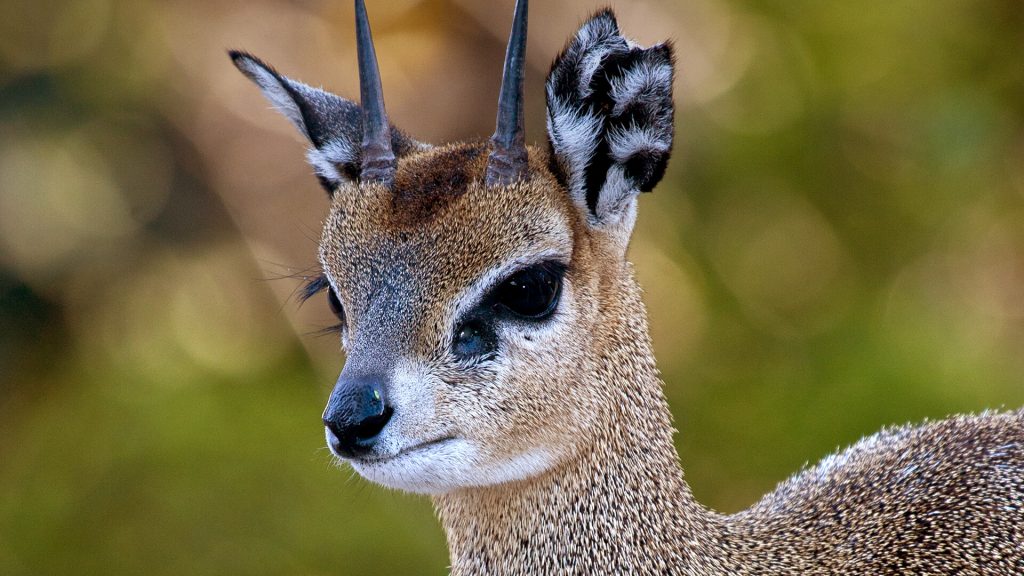
The klipspringer is a small mountain antelope that lives on rock, keeps a lookout, and whistles at the first sign of danger. Hunting one means glassing for hours, climbing steep ground, and making a precise shot on a target the size of a tennis ball. Come and hunt klipspringer on the mountain ranges of our 55,000-acre property in the malaria-free Eastern Cape. Here’s what you need to know.
Skip ahead: Show me hunting packages.
Klipspringer at a glance
Record-book figures are from Rowland Ward’s African minimums and records and published SCI minimums.
| Fact | Detail |
| Scientific name | Oreotragus oreotragus |
| Name | Afrikaans for “rock jumper” |
| Shoulder height | 45 to 60 cm (18 to 24 in) |
| Weight | 10 to 18 kg (22 to 40 lb) |
| Horns | Rams only in South Africa |
| Rowland Ward minimum | 4 1/8 in (10.5 cm), one horn |
| Rowland Ward world record | 6 3/8 in (16.2 cm) |
| SCI minimum | 10 points (rifle), 9 points (bow) |
| Habitat | Koppies, cliffs and rocky mountain slopes |
| Social structure | Mated pairs that share a territory |
| Diet | Browser: leaves, shoots, flowers, fruit, succulents |
| Group | One of southern Africa’s Tiny Ten antelope |
| Huntershill trophy fee | $2,350 (2027) |
What is a klipspringer?
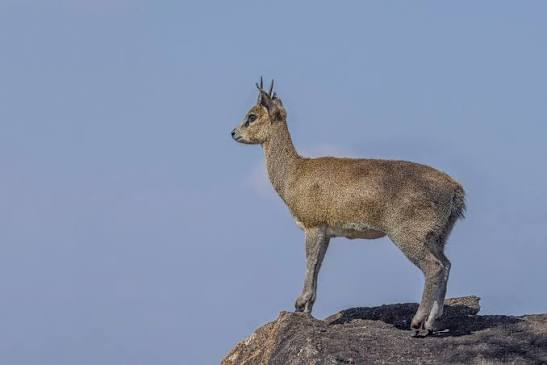
A klipspringer is a small, stocky antelope built for life on rock. It stands 45 to 60 cm at the shoulder and weighs 10 to 18 kg, about the size of a medium dog. Ewes are often slightly heavier than rams.
The body is compact, with a short neck, short tail, and a high, rounded back. You will notice the stance first. A klipspringer stands with all four hooves drawn close together, often balanced on one small point of rock.
Coat
The coat is thick and coarse. Its speckled colour runs from yellow-grey to olive-brown, with a paler belly, and it blends into lichen-covered rock. Each hair is hollow and brittle. The hollow hair insulates the animal against cold nights and hot days, and it cushions knocks against the rock. It also comes loose easily, which affects how we handle a trophy.
Hooves
Klipspringer walk on the tips of their hooves. Each hoof has a hard outer rim and a softer, rubbery centre. The rim bites into edges and the centre grips smooth rock. This lets a klipspringer bound up a cliff face and stop dead on a narrow ledge.
How to tell a ram from a ewe klipspringer
In South Africa, only rams carry horns. The horns are short, straight and set close together, rising almost vertically from the head. They are ringed at the base and smooth towards sharp tips. Both sexes have large, dark preorbital glands in front of the eyes, which they use to mark territory. A pair seen together will show one horned animal and one without horns.
Where do klipspringer live?
Klipspringer live on steep, broken rock. In South Africa you will find them in the Drakensberg, the Cederberg, the Karoo mountains, the rocky parts of the Lowveld and the ranges of the Eastern Cape. The species is widespread and listed as Least Concern.
They stay close to rock all their lives. Open plains and flat bushveld hold no klipspringer, however good the feeding. A pair usually lives on the same koppie, cliff or stretch of mountain for years.
On Huntershill, we hunt them on the higher ground of our mountain ranges. Below them lie the open grassy plains where our hunters take sable antelope, springbuck, wildebeest, and red hartebeest. A klipspringer hunt gives you a very different day in the field from a plains game hunt, on the same property and in the same week.
You might enjoy this: Bushbuck Hunting Safari in South Africa
What does a klipspringer eat?
A klipspringer is a browser. It eats leaves, young shoots, flowers, fruit, seed pods and the succulent plants that grow in cracks between the rocks. After rain it also takes fresh green grass, though grass makes up a small part of its diet.
Klipspringer seldom drink. They get most of their water from the plants they eat and from dew. This lets them stay on high, dry ground for long periods. Waiting at a waterhole is therefore of no use on a klipspringer hunt. We find them by glassing the rocks where they feed and rest.
Klipspringer behaviour
Klipspringer behaviour shapes every stage of the hunt. These are the habits we plan around.
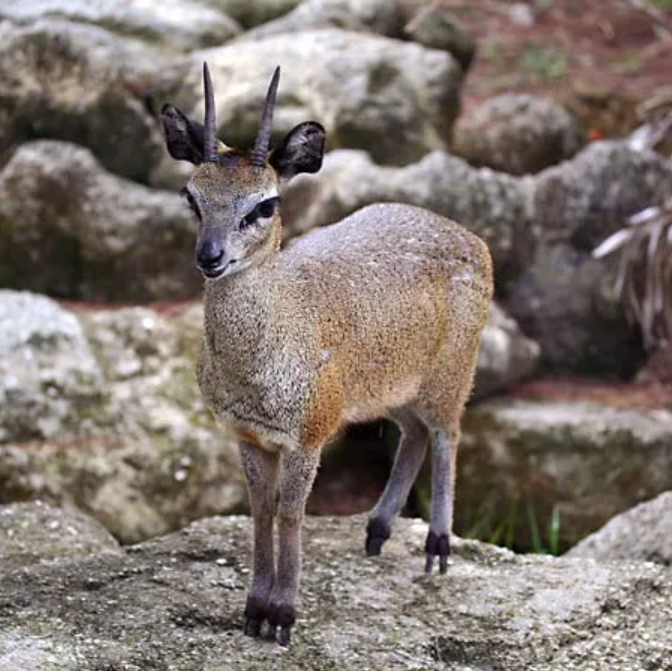
- They live in pairs. A ram and ewe pair for life and stay within a few metres of each other. The current year’s lamb may be with them. Larger groups are rare.
- They hold a territory. A pair defends its own patch of rock and marks it with dung middens and scent from the glands in front of the eyes. They use the same paths, ledges and resting spots day after day.
- One keeps watch. While one animal feeds, the other often stands on a high rock and watches the slopes below. The ram usually takes this role. The lookout is what makes a close approach so hard.
- They whistle when alarmed. A klipspringer that sees danger gives a sharp, high whistle, and the pair often call back and forth. The alarm warns every animal on that slope.
- They run uphill. A frightened klipspringer bounds up into the rocks, then often stops on a high point to look back. That pause gives many hunters their shot.
- They feed early and late. They feed in the early morning and late afternoon. In the heat of the day they rest in the shade of ledges and overhangs. On cold winter mornings they move onto open rock to sit in the first sun.
Are klipspringers dik-diks?
No. Klipspringers and dik-diks are separate species in different genera. The klipspringer is Oreotragus oreotragus. Dik-diks belong to the genus Madoqua.
The two are often confused. Both are small antelope that live in pairs and mark territory with the gland in front of the eye. Both are also part of the Tiny Ten, the list of small antelope that hunters set out to collect in southern Africa.
| Klipspringer | Dik-dik | |
| Weight | 10 to 18 kg | 3 to 6 kg |
| Habitat | Rock and mountains | Dry bush and thicket |
| Nose | Short | Long, flexible snout |
| Coat | Coarse, speckled, hollow hair | Fine, soft, grey-brown |
| In South Africa | Widespread | Absent (the Damara dik-dik occurs in Namibia) |
Hunters completing the Tiny Ten take their dik-dik in Namibia, but you can find dik-dik at Huntershill as well. The klipspringer you can hunt with us in the Eastern Cape.
When is the best time to hunt klipspringer?
The best time to hunt klipspringer in the Eastern Cape is the cool, dry winter from May to September. Our main hunting season runs from March to October.
Winter brings three advantages. The vegetation on the slopes thins out, so you can see further into the rocks. The cool air makes the climbs easier. And on cold mornings klipspringer come out onto bare rock to warm up, which is when we spot most of them.
The time of day matters as much as the month:
- First light to mid-morning: The best window. Pairs are feeding or sunning on exposed rock.
- Midday: They lie up in shade and are hard to find. We use these hours to glass slowly or move to a new area.
- Late afternoon: They feed again. Low light from the side picks out their coats against the rock.
Mountain wind swirls and changes through the day. Klipspringer hunt with their eyes first, and their noses still catch scent carried up the slope. We plan every stalk around the wind on the day.
How we hunt klipspringer at Huntershill
We hunt klipspringer on foot, by spot and stalk. A typical hunt follows five stages.
- Glassing. Your PH and trackers set up on a high point across a valley and search the opposite slope with binoculars. A klipspringer’s colour matches lichen-covered rock, so this takes patience. Often the first sign is a shape that moves when the rocks around it do not, or a pair of horns against the sky.
- Judging. Once we find a pair, your PH judges the ram’s horns through a spotting scope before any stalk begins.
- Planning the stalk. We study the ground, the wind and the lookout’s line of sight. The approach uses ridges, gullies and boulders to keep you hidden.
- Closing the distance. This is the slow part. You climb, sometimes on hands and knees, and stop often. The aim is a solid rest with a clear view of the pair.
- The shot. Most of our klipspringer shots are taken at 100 to 250 metres, often across a ravine and at a steep angle up or down.
When a pair whistles and runs, we stay still rather than follow. A klipspringer often stops on a high point to look back, and your PH will tell you when the shot is there. Our professional hunters set the pace of each stalk to suit you.
Fitness and gear for a klipspringer hunt
A klipspringer hunt asks more of your legs and lungs than most plains game hunts. The climbs are short and steep, the footing is loose in places, and you will spend time crouching behind rock. Walking hills or climbing stairs with a light pack for a few weeks before your trip makes a real difference.
Pack these items for the mountain:
- Boots with a stiff sole, good ankle support and a rubber tread that grips rock. Light hiking boots work well. Break them in before you travel.
- Binoculars, 8x or 10x. You will spend more time glassing than walking.
- Clothing in muted greens and browns, layered. Winter mornings in the Eastern Cape mountains are cold and the afternoons warm up quickly.
- Gloves for climbing over rock and for cold early starts.
- A small day pack for water, a warm layer and a rest for the rifle.
Your PH carries shooting sticks, and our trackers carry the heavier gear. Laundry is done daily at the lodge, so you can pack light. Our Hunting FAQs cover travel, flights and firearms in more detail.
Best calibre and bullets for klipspringer
The best rifle for klipspringer is one you can shoot accurately at a small target out to 250 metres. A klipspringer is light, and any centrefire hunting cartridge kills one cleanly with good shot placement.
The main concern is the skin. A fast, wide-expanding bullet leaves a large exit wound in a body this small and can ruin the cape. We give our hunters two options:
- A smaller calibre, such as a .222, .223, .22-250 or .243, with a bullet that expands slowly.
- Your main plains game rifle, such as a .270, 7mm or .30-06, loaded with solids or non-expanding bullets for this one animal.
Practise before your trip from shooting sticks, a pack and a rock, at steep angles up and down. Klipspringer shots are always taken from a rest.
You are welcome to use one of our rifles. Rifle hire costs $6 per round fired on plains game, and we keep spare rifles at the lodge.
Bow hunting klipspringer
Klipspringer can be hunted with a bow, and it is one of the harder bow hunts in South Africa. You will need to get within about 30 metres of a pair with a lookout on guard. Expect slow progress and several blown stalks. Our bow hunting packages can include klipspringer.
Klipspringer shot placement
The vital area on a klipspringer is about the size of a tennis ball. Take time to get a steady rest and wait for the animal to stand in a clear position.
- Broadside: Follow the back line of the front leg up into the body and aim one third of the way up the chest. The bullet passes through the heart and lungs. A klipspringer’s body is short, with little room behind this point. A shot that drifts back hits the stomach.
- Quartering away: Aim for the far front shoulder, so the bullet passes forward through the chest. On a small animal the angle changes quickly, so line up on the exit point.
- Uphill and downhill: Most klipspringer shots are taken at an angle. On a steep slope the bullet strikes higher than on flat ground, so hold slightly lower. Your PH will give you the hold before you shoot.
- Shots we do not take: Running shots, shots at an animal partly hidden by rock, and head or neck shots. A wounded klipspringer that reaches the cliffs is very hard to recover.
After the shot: Recovering a klipspringer
A well-hit klipspringer usually goes only a few metres. It may drop where it stood or fall from its ledge into the rocks below.
- Mark the spot. Note where the animal stood when you fired and where you last saw it. Pick a landmark beside each: a bush, a pale rock, a crack in the cliff.
- Stay put and reload. Your PH will watch through binoculars while you hold your position, ready for a follow-up shot.
- Wait. We give the animal time before we approach. A klipspringer pushed too soon can run deep into broken rock.
- Approach from above. Where the ground allows, we come in from higher up, with a view down onto the spot.
- Track on rock. Our trackers follow blood, scuffed lichen and hair on the stone. On bare rock, sign is sparse and this work is slow.
The trackers carry the animal out once it is down. The hollow hair loosens with rough handling, so care at this stage protects your trophy.
How to judge a trophy klipspringer
A good klipspringer ram carries horns of about 4 inches (10 cm) or more. Rowland Ward’s minimum is 4 1/8 inches, measured on the longer horn. The world record stands at 6 3/8 inches. SCI scores add the length and base circumference of both horns, with a minimum of 10 for rifle and 9 for bow.
The gap between an average ram and a book ram is a fraction of an inch. We judge every ram through a spotting scope before a stalk begins, and look for four things:
- Height above the ears. Horns that rise well clear of the ear tips, seen side-on, belong to a good ram.
- Heavy bases. Mature rams show thick, deeply ringed bases.
- Intact tips. Older rams wear or break their tips on rock, which lowers the measurement.
- Body and behaviour. A mature ram is thick in the neck and usually takes the lookout post.
We pass on young rams and keep looking. Taking mature rams keeps our mountain pairs breeding and the population healthy.
Fair chase, licences and conservation
We hunt klipspringer on foot, in their natural mountain habitat, by fair chase. The animal always has a full chance to see you, whistle and escape, and many stalks end that way.
Your hunting licence is included in our daily rate, and we handle the paperwork when you arrive. Your taxidermist arranges the permits needed to export your trophy once it is ready.
Trophy fees fund the management of our land and wildlife. We select mature rams, track population numbers on our mountains and set our offtake to match. Read more about our conservation work.
How much does it cost to hunt a klipspringer?
Our trophy fee for a klipspringer is $2,350 for 2027. You pay the trophy fee plus a daily rate for each hunting day. Full species prices are on our 2027 hunting price list.
| Item | Price (USD) |
| Klipspringer trophy fee | $2,350 |
| Daily rate, 1 hunter with 1 PH | $400 per day |
| Daily rate, 2 hunters with 1 PH | $275 per hunter per day |
| Non-hunting observer | $150 per day |
The daily rate covers accommodation, all meals, beer, wine and soft drinks, laundry, airport transfers, your PH, skinner and trackers, a 4×4 hunting vehicle, your hunting licence and field preparation of your trophies.
Most hunters add a klipspringer to a wider safari. You can add one to any of our hunting packages or build a custom mountain hunt around it. Other small antelope on our list include Cape grysbuck at $2,350, blue duiker at $1,900, steenbuck at $350 and grey duiker at $300.
What is the most difficult animal to hunt in South Africa?
Our PHs name the vaal rhebuck as the most difficult animal to hunt in South Africa, with the klipspringer close behind. Both live on high, open ground, watch the slopes below with sharp eyes and flee at the first movement.
Other species we rate as hard to hunt:
- Bushbuck, which keep to thick cover and move mostly at dawn and dusk.
- Blue duiker, a tiny forest antelope seldom seen in the open.
- Bushpig, which feeds almost entirely at night.
- Caracal, a secretive cat that we hunt with dogs.
The Cape buffalo is the most dangerous hunt we offer. Its difficulty comes from the risk a wounded bull poses to you and your PH.
Klipspringer hunting FAQs
Do female klipspringer have horns?
In South Africa, female klipspringer have no horns. Only the rams carry them. In parts of East Africa, some ewes have horns as well.
Is the klipspringer part of the Tiny Ten?
Yes. The Tiny Ten are the blue, common and red duiker, the Cape and Sharpe’s grysbok, the steenbok, the oribi, the suni, the Damara dik-dik and the klipspringer.
How long do klipspringer live?
Klipspringer live for about 10 to 15 years. A pair can hold the same territory for most of that time.
How many days does a klipspringer hunt take?
We plan two to three days on the mountain for a klipspringer. Many hunters take one as part of a five- to seven-day safari for several species.
Where do I fly into for a hunt at Huntershill?
Fly into East London or Port Elizabeth (Gqeberha). We provide free transfers from either airport to the lodge. The Eastern Cape is malaria-free.
Can my partner come without hunting?
Yes. Observers pay $150 a day. Non-hunters can join game drives, see lions, cheetahs and wild dogs, walk to San rock art, or book a treatment at the Huntershill Spa. See all our non-hunter activities.
What else can I hunt on the same trip?
Our property holds more than 70 species. Hunters often pair a klipspringer with kudu or bushbuck on the slopes, and with plains game such as waterbuck and red hartebeest lower down.
Book your klipspringer hunt
We can add a klipspringer to any Huntershill safari or plan a mountain hunt around it. Send us your dates, the species you want and your choice of rifle or bow, and we will get back to you. Your African adventure starts now.
Email info@huntershillsafaris.co.za, call +27 45 011 0034, or use our contact us.